kjzz.org · September 7, 2026
These next steps will help Arizona adapt to Colorado River cuts, environmentalists say
# These next steps will help Arizona adapt to Colorado River cuts, environmentalists say
KJZZ | By Alex Hager
Published September 7, 2026 at 5:33 PM MST
Alex Hager / KJZZ
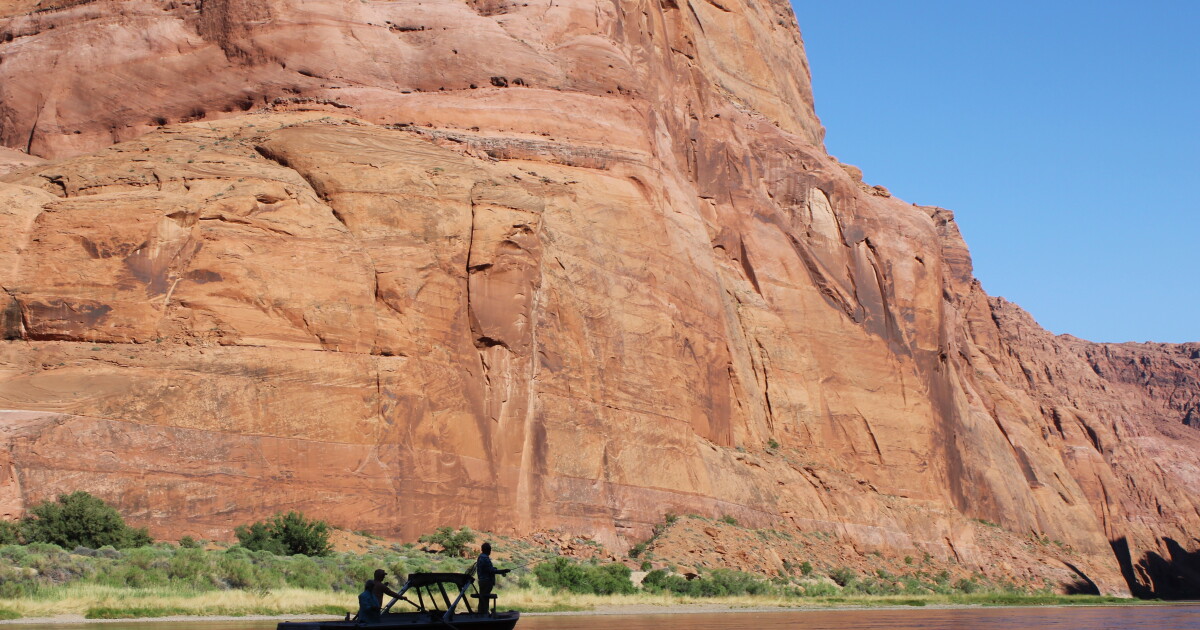
People fish from a boat in the Colorado River just below Glen Canyon Dam near Page, Arizona on June 17, 2026.
A coalition of environmental groups is calling on policymakers to take action on the Colorado River as a new plan for cutbacks looms over states that use its water.
After years of failed negotiations between the seven states that share the shrinking river, the federal government stepped in with its own plan to rein in demand for water. The plan comes after more than two decades of climate change and drought — paired with steady demand from cities and farms across the West — brought the nation’s largest reservoirs to record lows.
Kevin Moran, a water policy expert with the Environmental Defense Fund, which co-authored the call to action, said it is now time to focus on the health of the river system, involve tribes in a substantive way and move away from a “cycle of depletion and crisis management.”
“The only way we do that is to work proactively to find ways of using less water across all water use sectors and in all states,” he said.
In a public statement, the group of seven conservation organizations is asking for a few measures that could make huge planned reductions more predictable and tolerable.
“I think it can feel overwhelming when we see the headlines,” said Haley Paul, an Arizona-based water expert with the Audubon Society, which co-authored the statement. “But in the end, we still have agency and we still have choices we can make to improve our water outlook.”
The first of those measures is focused on a three-state agreement that would see Arizona, California and Nevada volunteer to cut a large, additional sum of water on top of the federal plan, ultimately helping Arizona avoid even steeper cuts from the federal government.
The three states — collectively known as the Lower Basin — have outlined the details of that plan, but have not yet finalized it. The conservation groups are urging those states to finish the deal.
The three-state plan would also need approval from the Arizona legislature to move forward. Arizona is the only state among the seven that use the Colorado River in which the legislature has such a power.
Earlier this summer, experts told KJZZ that the legislature is unlikely to block the deal. However, recent calls from Republican lawmakers could indicate some partisan discord ahead of a special session that would be required for timely approval of the three-state plan.
“Going to the legislature is no small act,” Paul said. “So we want to see that done bipartisan and hopefully [with] engagement from all sides.”
Paul and her colleagues are also calling for upstream states to put together a plan for voluntary water cutbacks. The Upper Basin states of Colorado, Utah, New Mexico and Wyoming are not forced to take any mandatory cuts under the new federal plan, and the conservation groups are pushing them to outline a way to save water on a voluntary basis instead.
The environmental advocates are also asking the federal government to put money on the table that would make it easier to carry out water saving work in all seven of those states.
Federal funding has been a big part of water conservation in recent years. Water users across the West have collectively received billions of dollars as an incentive to cut back on demand for the Colorado River — from crop fields in Wyoming to suburban neighborhoods around Phoenix. Similar spending will likely be a key part of mandatory and voluntary conservation plans going forward.