tucson.com · Josh Heywood and Stephen Richer For The Arizona Republic · September 5, 2026
Opinion: Arizona needs billions for water. Here's how to pay for it
# Opinion: Arizona needs billions for water. Here's how to pay for it
- Josh Heywood and Stephen Richer For The Arizona Republic - Sep 5, 2026 - 21 mins ago
See the A1 covers from the past for this day in history.
The following is the opinion and analysis of the writer:
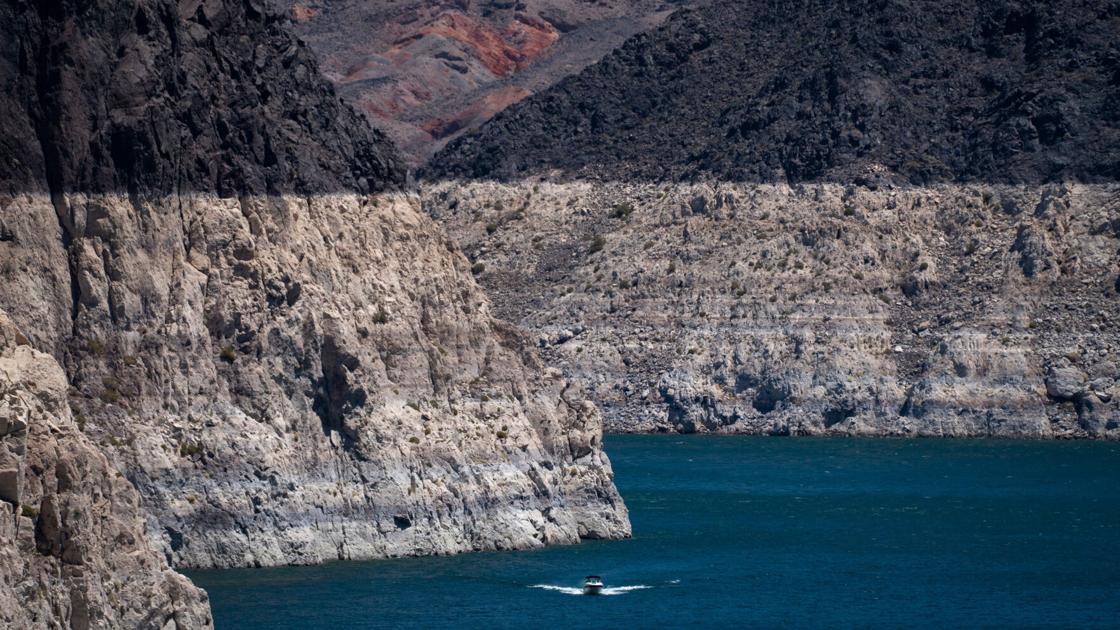
A boat cruises on Lake Mead on the Arizona-Nevada border on June 6. A high-water mark, or bathtub ring, is visible on the shoreline. Lake Mead is down more than 180 vertical feet. Mark Henle, Arizona Republic
The federal government announced new Colorado River guidelines. The outcome presents a serious challenge for Arizona, but it's not the worst-case scenario. To face these cuts, Arizona needs a significant, stable funding source for water development in our state budget.
The Colorado River supplies about one-third of Arizona's water. But the river isn't what it once was. At least 10% of its natural flow has vanished since 2000 because of drought and rising temperatures. Cuts were inevitable.
Under the new guidelines, Arizona will bear 61% of the mandatory reductions assigned to the three Lower Basin states ― more than California and Nevada combined. Arizona's full allocation of 2.8 million acre-feet will be reduced by 760,000 acre-feet to 2.04 million acre-feet.
Meanwhile, the Upper Basin states of Colorado, Utah, Wyoming and New Mexico get off virtually scot-free.
That imbalance is hard to justify, given that Arizona has one of the nation's strongest records of water conservation. Our overall water consumption today, with 7.7 million people, is roughly the same as it was nearly 70 years ago, when we had approximately 1.1 million residents.
Some would like to blame our predicament on Arizona's industrial growth: semiconductor manufacturers, data centers and housing development. But, again, our water consumption is the same as it was before all those economic engines existed, and since the 1980s, we've actually decreased our water use.
Undoing industrial growth wouldn’t have materially changed our water consumption; it would have just made us a lot less wealthy. The responsible question is not what Arizona should stop building, but what we should start building.
We cannot predict exactly what combination of conservation, innovation, infrastructure and new supplies will ultimately secure Arizona's water future. What we do know is that it will cost billions of dollars. And right now, we don’t have a significant, stable statewide funding source to pay for it.
In his final year as governor, Doug Ducey signed legislation pledging $1 billion over three years toward Arizona’s water future. At the time, Ducey promised to "invest heavily in conservation, efficiency, reuse and advanced water technologies like desalination."
Smart. And prescient.
But "the best-laid plans of mice and men often go awry." Only about one-third of that commitment has survived successive budget "sweeps" to help finance other state obligations.
It's clear we lack fiscal discipline when it comes to water. We need to tie our own hands by requiring continuing state contributions and making that money untouchable for anything other than water.
Texas did just this in 2025, when it dedicated up to $1 billion annually in water funding through a bipartisan ballot referral that then received more than 70% support from the state's voters.
We should do the same in Arizona and build a water fund financed through our growth. We currently collect $8.15 billion in General Fund sales and use taxes. That would become the baseline. Moving forward, the first sales-tax revenue collected above that baseline would go to the Arizona Water Fund, capped at $200 million annually. The dedication should be long-term but include a reasonable sunset.
Over the past decade, Arizona's General Fund sales and use tax collections have increased by an average of nearly $400 million per year, almost twice the proposed annual cap. To ease the transition, we could even cap the first-year contribution at $100 million.
Once the fund reaches its annual cap, every additional dollar would remain available for schools, public safety, health care and other priorities. This wouldn't raise taxes. It also wouldn't take a dollar from what Arizona already collects or pull from other state revenue sources.
Over a decade, this could generate close to $2 billion to be used for water. Even at its full cap, the contribution would equal only about 2.5% of current sales and use tax collections. As sales-tax revenues grow, that share would become even smaller.
This means Arizona's much-discussed industrial growth would help finance our future water security.
That's the point.
## What $200 million a year could do
Of course, $200 million a year wouldn't solve every water problem Arizona faces. But consider what it could do.
Phoenix's planned North Gateway purification facility will cost around $600 million. Together with the nearby Cave Creek facility, the projects will produce about 14,000 acre-feet of potable water annually.
Arizona is also exploring a desalination exchange with California. Water from the Carlsbad plant currently costs the San Diego County Water Authority approximately $3,500 per acre-foot to produce. At that price, $200 million equals roughly 57,000 acre-feet of water.
Some will bristle at the cost. And it's true: $200 million is a lot of taxpayer money.
But it's a small percentage of our total state budget, and as Sybil Francis and the Center for the Future of Arizona have consistently found, water security is a priority for Arizonans across the political spectrum. State politicians consistently talk about the importance of water funding. But their action has been less consistent.
So let's make it happen.
We're not going to run out of water any time soon. We don't need to stop growing.
But the latest Colorado River cut reminds us to do what Arizona has always done when it comes to water: plan for the future. This time, that plan should include dedicated funding.
Follow these steps to easily submit a letter to the editor or guest opinion to the Arizona Daily Star. Arizona Daily Star
Josh Heywood and Stephen Richer are co-founders of Project 48 Arizona. Richer is also a legal fellow at the Cato Institute and a former Maricopa County recorder.
Respond: Write a letter to the editor | Write a guest opinion