davisenterprise.com · Mikhail Zinshteyn, CalMatters · September 8, 2026
Community colleges suddenly oppose plan to let them offer more bachelor’s degrees | News | davisenterprise.com
# Community colleges suddenly oppose plan to let them offer more bachelor’s degrees
- By Mikhail Zinshteyn, CalMatters - Sep 8, 2026 - Sep 8, 2026 Updated 1 hr ago - 0
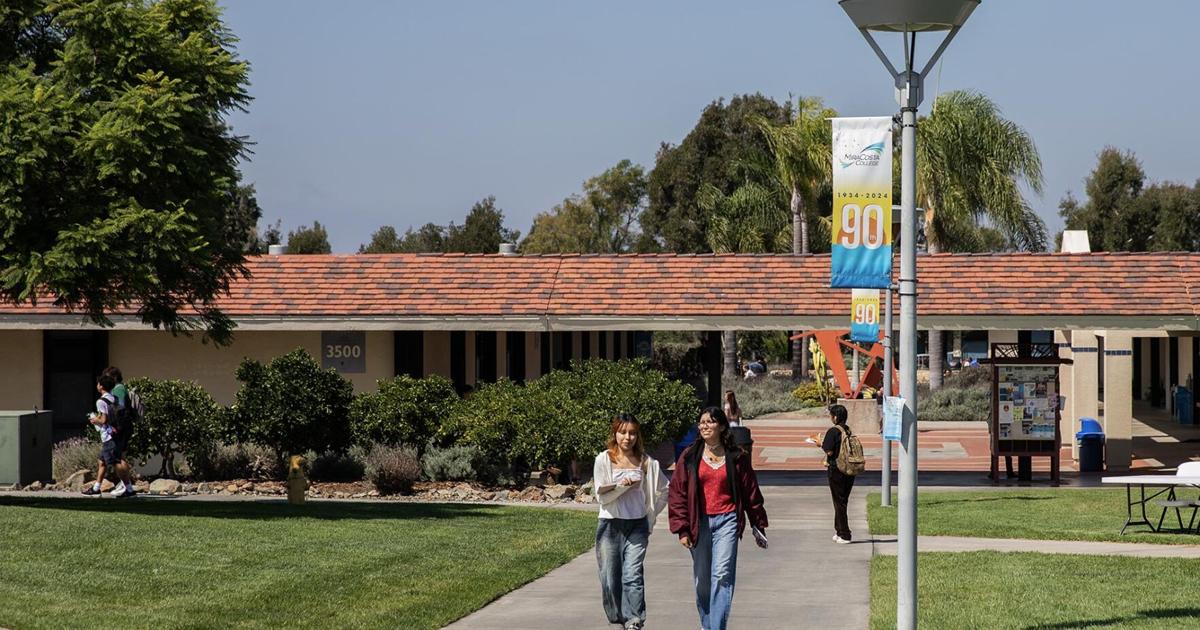
Students walk through the MiraCosta College campus in Oceanside on Sept. 26, 2024. Adriana Heldiz/CalMatters photo
> This story was originally published by CalMatters. Sign up for their newsletters.
California’s community colleges have been trying for several years to offer more bachelor's degrees. This year, they put their hopes in two sweeping bills designed to help them do that. But lawmakers made massive, last-minute changes that prompted the state’s community colleges to now oppose the legislation.
The abrupt change of heart, spurred by new limits on how much the colleges could grow their bachelor’s programs, didn’t influence the outcomes of the bills, Senate Bill 960 by state Sen. Christopher Cabaldon, D-West Sacramento, and Assembly Bill 2694 by Assemblyman David Alvarez, D-Chula Vista. Both passed this week by wide margins in the Legislature and now head to Gov. Gavin Newsom’s desk.
In recent years, Newsom vetoed bills that sought to expand the community colleges’ ability to issue more bachelor’s degrees. Still, Newsom’s office was involved in the revision of the latest bills, Cabaldon said in a Senate floor speech Monday.
Combined, the bills introduce new mechanisms for determining when colleges can create bachelor’s degrees and how many they can offer. The new approach has accountability metrics — colleges would be able to offer an additional two to 12 bachelor’s degrees starting in 2028 depending on their students’ certificate, degree and transfer completion rates. No college district could propose more than three new degrees per year and districts would need to prove that there’s a workforce need in their region to justify the creation of a bachelor’s degree. That’s a claim the state's labor secretary would step in to validate if the California State University system objects, as has regularly occurred in the pitched policy disputes between the community colleges and the university.
“This will give us peace,” he said in a phone interview. “That doesn’t mean everybody’s going to agree all of the time, but it does mean the endless war and bickering and fighting and more and more legislation will come to an end.”
“We're being asked to … support a process that is not completely understood or vetted at the last minute, and so that's just not great policymaking,” said Larry Galizio, president and CEO of the Community College League of California, an association representing community college presidents and board leaders.
Historically, the community colleges and Cal State have clashed over which bachelor’s degrees the colleges can teach. A 2021 state law was supposed to establish peace in the realm, but the colleges and Cal State regularly disagreed on a key concept — degree duplication. That law said the colleges couldn’t create bachelor’s degrees that are already offered by any Cal State or University of California campus, even if a community college is hundreds of miles from the nearest public university.
Colleges and several lawmakers called that an unfair arrangement, since many community college students can’t relocate to a distant university. In some instances, community colleges created those degrees anyway, over the objections of the Cal State system, EdSource reported.
A recent report found that 29 of the state’s 116 community colleges are located at least 25 miles from a public university. Their students are “place-bound” or can’t easily move from the area their community colleges serve. Roughly 157,000 students attend these colleges.
Some students say they need their local community colleges to offer bachelor’s degrees because local employers want those — certificates or associate degrees aren’t enough. But under existing law, those colleges cannot provide them because a Cal State 500 miles away offers that degree already.
On the other hand, community colleges post low transfer rates — just 21% of students who wanted to transfer do so after four years, the state auditor reported. This may indicate a broken transfer system that could be remedied if more colleges could offer bachelor’s. Or it may demonstrate that colleges aren’t ready to widen their academic offerings because most also post low certificate and associate degree completion rates.
In response, Alvarez and Cabaldon wrote comprehensive bills this year to allow colleges to create bachelor’s degrees, even if they resemble degrees already offered by Cal State campuses. The community colleges were on board with those versions while the Cal State system was opposed; the system instead wanted more streamlined pathways for students to start their studies at a community college and earn a bachelor’s at a Cal State campus. Others in the system have feared that an expansion of community college bachelor’s degrees would siphon away students and crucial tuition revenue at a time when some Cal States are battling enrollment declines.
The new combined bills allow community colleges to propose bachelor’s degrees even if a nearby Cal State offers a similar program, but only if that Cal State program admits fewer than 75% of applicants from that nearby community college three consecutive years. The community college would still need to submit a workforce needs report and be governed by the degree caps also spelled out in the bills. That workforce need could be that employers are having difficulty filling positions that require a bachelor’s degree, the two bills say.
And unlike the current policy, in which there’s no arbiter to settle an impasse between community colleges and the Cal States over duplication, a review by the state’s secretary of labor siding with the colleges would remove the Cal State system’s challenge to the degree. But districts face consequences for being wrong: If the labor secretary sides with Cal State, the district is barred from submitting an application for a similar program for five years.
The newly created caps on the number of degrees community college districts can offer are a problem for the community college system. Districts will be judged by their student completion rates and how those rates compare to the statewide average.
compares with every other district in the state,” a letter of opposition to Cabaldon reads from Sonya Christian, chancellor of California Community Colleges. “A district could improve its own student outcomes” but still have the same caps apply to them, “or even see its eligibility change simply because the statewide average changed,” she wrote.
Galizio of the Community College League also takes issue with the caps on degree creation. He said in an interview that campuses with low graduation rates typically serve more low-income students, the same students who need more bachelor’s degrees to get a leg up in the workforce.
But not all community college leaders think the bills are bad for their campuses, including Jose Fierro, president/superintendent of the Cerritos Community College District. Based on his college’s completion rates, he thinks he’ll be permitted to add a total of six to eight new bachelor’s degrees starting in 2028. That’s plenty for now, he said. The school has two now and plans to launch more in 2027.
“We are not trying to become a university. It's not our mission. We're trying to align with industry and provide pathways for social and economic mobility for our students,” he said in an interview.
This article was originally published on CalMatters and was republished under the Creative Commons Attribution-NonCommercial-NoDerivatives license.