mendovoice.com · John Fensterwald, EdSource · September 6, 2026
California’s next governor to face tough choices for education as state budget tightens • The Mendocino Voice | Mendocino County, CA
# California’s next governor to face tough choices for education as state budget tightens
by John Fensterwald, EdSource April 9, 2026 April 23, 2026
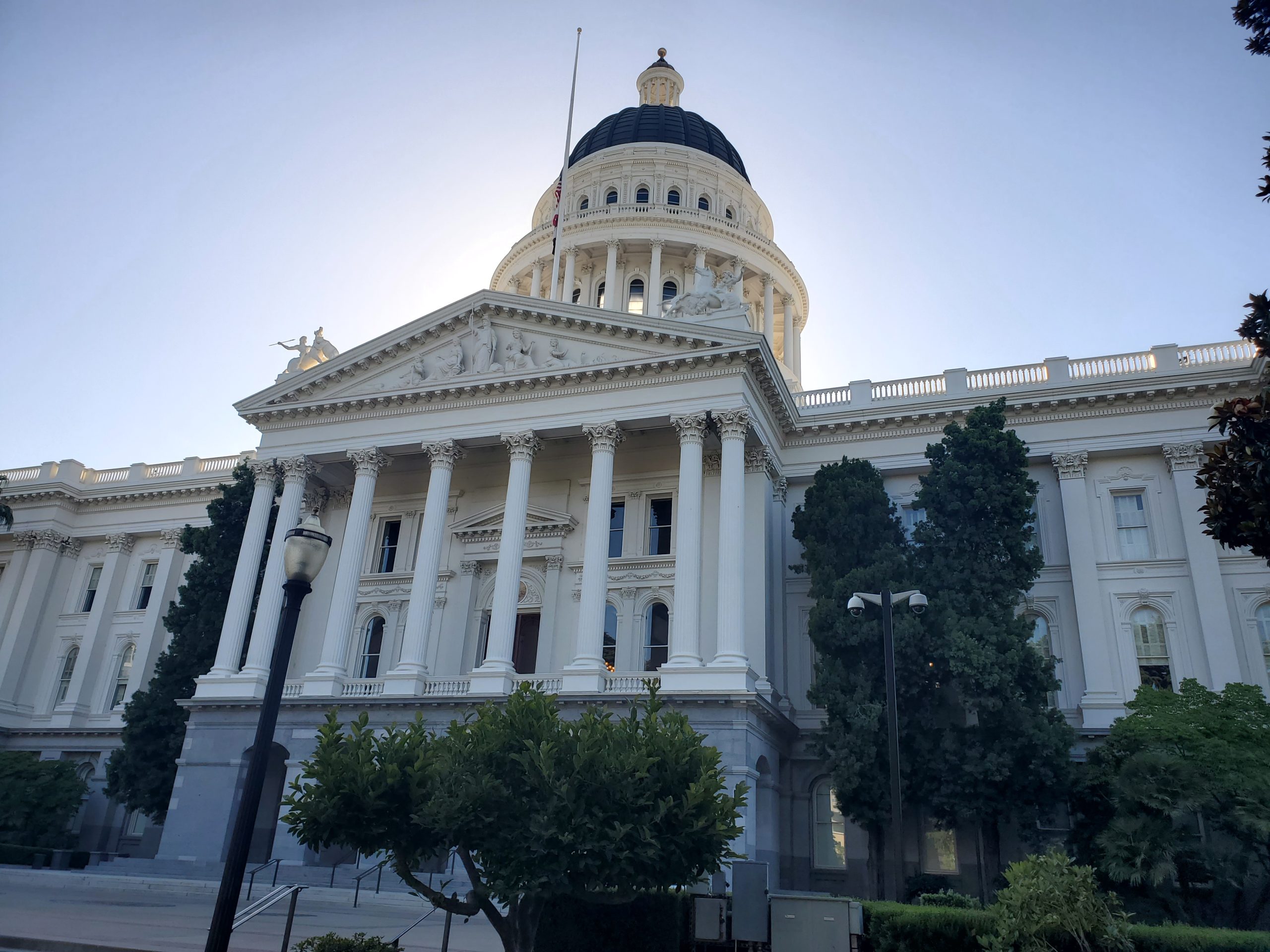
The California State Capitol in Sacramento, Calif. on May 31, 2021 (Dan McMenamin/Bay City News)
This was written by staff at the nonprofit newsroom EdSource. It was republished by The Mendocino Voice in partnership with EdSource to bring relevant education news to Mendocino County readers. Learn more about EdSource here.
SACRAMENTO, CA., 4/9/26 — Whoever is elected this fall as governor and state superintendent of public instruction will face a new reality for California education.
The changing of the guard after the eight-year term limits for Gov. Gavin Newsom and State Superintendent of Public Instruction Tony Thurmond will likely coincide with a belt-tightening period for the state budget, forcing tough choices for the next governor.
A consolation prize, however, could be more authority over the California Department of Education. Newsom is proposing to shift control of the department’s operations to a new education commissioner appointed by the next governor — an arrangement common among states. The shift would diminish the power of the state superintendent, who’d be relieved of managing the education bureaucracy while remaining the state’s elected advocate-in-chief of education.
Over the past six years, amid a burst of state revenue, Newsom and the Legislature enacted multibillion-dollar programs that redefined TK-12. They expanded TK-12 with transitional kindergarten for 4-year-olds and lengthened the school day through expanded learning. Money for apprenticeships and career pathways created post-high school opportunities, and community schools broadened connections with parents and neighborhood health services.
But the era of large-scale programs will be Newsom’s legacy, not his successor’s. Circumstances beyond the next governor’s control — continuing declines in enrollment and revenues, probably retreating to historical levels, forcing additional school closures, with a recession looming — will temper ambitions of what more can be done for California’s students.
And then there are sounds of frustration, growing louder from the picket line to the school boardroom to the hallways of Sacramento. Districts are complaining that the rollout of ambitious programs, with accompanying reporting requirements and regulations, has diverted their attention and strained their budgets.
David Roth, superintendent of Buckeye Union School District, which serves 4,200 TK-8 students in El Dorado County, was emphatic. “We don’t need new programs,” he said. Adding more, he said, would result in continued labor strife over pay raises that many districts argue they can’t afford, and “an inability to maintain the programs we have.”
Roth’s message, reiterated by others, is that schools should get back to basics, as in base funding — the portion of the state’s funding formula intended to cover general operating expenses. They want the Legislature and the next governor to make raising base funding the number one priority.
Roth established Raise the Base Coalition, a website that lays out the challenge of rising costs. Forty districts have signed up so far; they are primarily suburban districts with fewer-than-average high-needs students, and therefore receive less “supplemental” and “concentration” funding under the state’s Local Control Funding Formula and other programs with similar distributions.
Opposition to equity is not the issue, Roth said. “Even districts with above-median funding are struggling to keep pace with rising costs.” When there is more money to cover basic expenses, he added, all districts benefit.
Last month, school board presidents and members from 10 districts, mainly in the San Francisco Bay Area, made the same point while calling for, among other things, adjustments to the funding formula to reflect regional costs.
“As those entrusted with ensuring the long-term financial viability and educational success of our public schools, we write to sound the alarm about the profound, widespread fiscal challenges districts across the state are facing,” they wrote.
At first glance, their complaints may invoke little sympathy. From 2018-19, the year preceding Covid-19, through 2024-25, funding rose 53% through Proposition 98, the formula that sets the minimum share of state revenue for TK-12 and community colleges. Per student funding from the state will rise to more than $20,000, a record.
But several factors squeezing districts’ spending will likely escalate in the coming years, demanding the next governor’s attention.
Declining enrollment: The California Department of Finance projects the nearly decade-long statewide decline in enrollment to accelerate, with an additional 10% drop by 2033-34, bringing the total to 5.2 million students. Most districts will feel it, with enrollment losses of up to 20% in some Los Angeles County districts.
Districts receive funding based on the average number of students who attend school daily over the course of a year. Adding transitional kindergarten has propped up attendance, but now that TK is fully phased in, the average daily attendance decline will bite harder in many districts.
Special education: The percentage of students with disabilities has risen from 13% in 2018-19 to 15% in 2023-24, even as overall enrollment has declined. Newsom is proposing to add $500 million next year to equalize state special education funding among districts, but the overall trend has not favored districts. The federal share of total special education funding in California, never close to the 40% share that Congress envisioned 50 years ago when passing the federal special education mandate, has fallen steadily over the past decade, as has the state’s share of dedicated funding.
Districts will continue to be responsible for the shortfall. Districts’ share of special education costs has risen from 51% in 2014 to 63% last year, according to School Services of California, a statewide consulting company, and higher in some small districts.
Placer County Office of Education Superintendent Gayle Garbolino-Mojica said that unexpected special education costs have forced three of her districts onto the state’s financial watch list. Preschoolers are coming to school with serious special needs — autism, multiple disabilities, behavioral problems — “in numbers not seen before,” she said.
Inadequate cost-of-living adjustments: A 3% decline in a district’s attendance may not appear dramatic, but losing 3% of funding will be larger than the 2.41% cost-of-living adjustment that districts are projected to receive in 2026-27. And it’s larger than the 2.30% COLA they got this year and the 1.07% COLA in 2024-25. The state’s COLA is tied to a national formula of a basket of goods that doesn’t reflect the sharp rise in health insurance and the need to raise staff pay to retain teachers.
The state cushions the impact of a steadily declining enrollment by allowing districts to claim attendance over a three-year period. Without it, “we would be toast,” said Roth. But that’s not a long-term answer, he said. “We cannot adjust costs as quickly as we will lose revenue.”
### ‘Declining enrollment dividend’
Because of Proposition 98’s funding guarantee, TK-12 and community colleges will continue to receive 40% of the state’s general revenue, yet districts collectively will receive fewer dollars as their enrollments drop. The unallotted difference, euphemistically called a “declining enrollment dividend,” could grow to $7.5 billion annually, providing a pot of discretionary funding for the Legislature and governor. How to spend it could prove one of the more contentious decisions in the coming years. Among the options:
- Switching from