Honolulu Civil Beat · "Jenny "Jeta" Tang" · September 8, 2026
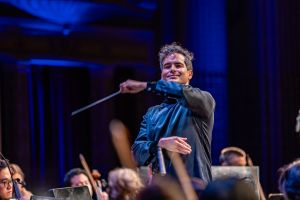
The orchestra survived collapse, reinvented itself and earned state recognition. Now the funding needs to catch up.
Her work has been showcased at Burning Man, where she was the only registered artist from Hawaiʻi in 2025. On the islands, her pieces have been exhibited at venues including East West Center, Downtown Art Center, and ARTS at Marks Garage.
Before moving to Hawaiʻi, Jeta worked in Silicon Valley at various AI startups, wrangling tools with funny names like Kubernetes and Jenkins. Today, she channels that technical background into her creative practice through web design and development at her digital agency, Dot Kine.
As an arts columnist for Civil Beat, Jeta covers Hawaiʻi’s creative communities and cultural landscape through a civic lens. Have a tip or know of an artist whose story should be told? Get in touch with Jeta via her website or by emailing her at columnists@civilbeat.org . Opinions are the author’s own and do not necessarily reflect Civil Beat’s views.
The orchestra survived collapse, reinvented itself and earned state recognition. Now the funding needs to catch up.
“Will you come and do Beethoven’s Ninth with us?” Jim Moffitt of Chamber Music Hawaiʻi asked JoAnn Falletta .
The Honolulu Symphony had already played its final regular concert before canceling the remainder of the 2009 season and filing for Chapter 11 bankruptcy . But the symphony wanted to perform once more.
“We have no money, though,” Moffitt clarified to Falletta, the acclaimed conductor who had served as the symphony’s artistic advisor. “It doesn’t matter,” Falletta said. “I’m going to pay for my own flight. I’ll come.”
Beethoven’s Ninth is one of classical music’s greatest declarations of collective hope: all people are brothers. For an orchestra facing extinction, the choice was an act of resilience.
“We wanted to thank our audience,” Falletta recalls of that 2009 performance, free to the public. “Everyone was crying. I was crying myself the whole time. No one believed the orchestra would come back.”
But just like in the film “Titanic,” the musicians continued playing as the ship sank.
What followed would become one of the most remarkable symphonic comebacks in the United States.
From 1998 to 2008, Honolulu Symphony’s concert attendance plummeted by 70%, from roughly 216,000 to 65,000, compounding its financial troubles. The crisis exemplified a broader American problem.
In many countries, orchestras receive substantial government support. But the United States – the nation that produced George Gershwin, Leonard Bernstein and Marin Alsop – has no reliable system of recurring funding, leaving orchestras largely dependent on private nonprofit models.
The collapse of the 110-year-old Honolulu Symphony was hardly an anomaly.
Unlike Broadway musicals, which can charge upwards of $1,000 per ticket, symphonies uphold a different philosophy. Ticket sales cover only about 30% of an orchestra’s budget in the United States, with the rest raised through aggressive fundraising.
Maestro Dane Lam , who has conducted around the world, says, “No orchestra has ever paid for itself in the history of mankind.”
Private donations and philanthropy help keep symphonies alive, but government funding also provides a critical lifeline. Symphonies rarely charge beyond what the general public can afford. In the U.S., the very commitment to accessibility can slowly become the cause of death.
Hawaiʻi’s musical identity spans centuries. The state has the oldest and only full-time municipal band in the country: the Royal Hawaiian Band , founded by Kamehameha III in 1836.
For two years following bankruptcy, Hawaiʻi was the only state without a symphony.
Falletta attributes its revival to a reciprocal bond between the musicians and their audience. These world-class musicians dedicated their lives to bringing music to the islands and kept playing even while owed months of backpay.
“No orchestra has ever paid for itself in the history of mankind.”
Civic leaders, too, refused to let music die. Former First Lady Vicky Cayetano was among the first to lead the resurrection .
Cayetano grew up in a musical household, co-starring in a movie with Elvis Presley at age 6. Her sister, child prodigy pianist Virginia “Ginny” Tiu , was discovered by Ed Sullivan at age 5, helping the family emigrate from the Philippines.
For Cayetano, a symphony-less Hawaiʻi threatened music education. Its absence would be sorely felt by the keiki .
The story goes that Cayetano bumped into ABC Stores CEO Paul Kosasa at Costco and recruited him to the Symphony Exploratory Committee , tasked with resurrecting the orchestra. The Kosasa Foundation donated up to $235,000 to recover the symphony’s assets from Chapter 7 liquidation. Valued at $780,000, the symphonic collection included a 2,700-work music library with scores by Queen Liliʻuokalani and other early 20th century Hawaiʻi composers.
In the hands of outside buyers, Hawaiʻi would have lost a historical piece of its musical culture.
But luck was on their side on St. Patrick’s Day in 2011. No one bid against them at the public auction, and the collection was saved, paving the way for the symphony’s rebirth , under its current name, the Hawaiʻi Symphony Orchestra.
Fourteen years later, the symphony achieved another hard-won victory with House Bill 1860 , designating HSO as the official state symphony. Hawaiʻi is now the second state, after North Carolina , with a state orchestra, opening the door to government funding.
“It’s impossible now for the symphony to end up where it was before,” Cayetano says with palpable gratitude. She stepped away from the HSO board last year after over a decade of service dating back to the Honolulu Symphony. Kosasa still serves as board president.
Traditionally, orchestras draw older crowds, which may have contributed to declining attendance. Part of the problem may also be cultural.
Amy Iwano, executive director of HSO, challenged my characterization of symphony-goers as “upper echelon,” crediting HSO’s success partly to revised programming that represents Hawaiʻi today.
“Most people think of orchestras in the Western canon,” she says. “But there are fantastic composers in the Far East. Hawaiʻi is positioned between East and West. Our music reflects place.”
HSO incorporates instruments like the Chinese pipa and Korean geomungo, telling the stories of Hawaiʻi through music.
That includes “ Raise Hawaiʻiki ,” an immersive Hōkūleʻa tribute created with the Polynesian Voyaging Society. Local actor Moses Goods narrated the voyage alongside 84 singers and 64 musicians earlier this year. The “ Films in Concert ” series also attracts new audiences. “People may be intimidated by a regular concert, but everybody loves a good movie,” Iwano says.
HSO’s upcoming season starts Sept. 25, with the full schedule and tickets available on its website .
Cayetano echoes Iwano’s sentiment that symphonies should not be viewed simply as entertainment reserved for a niche group.
Music’s effects on the human body and mind are far from fringe. A growing body of neuroscience research points to the same conclusion: Music can heal.
With HB 1860’s passage, Cayetano envisions a future where government will utilize the orchestra for community healing. In Montreal, doctors can prescribe symphony concerts to patients. HSO already puts that idea into practice, deploying small chamber ensembles to perform in medical clinics across Oʻahu.
For the first time in ten years, the orchestra will extend its reach to a neighbor island. On Sept. 19, HSO will perform a free concert, “ Mele for Maui ,” commemorating the third anniversary of the Lahaina wildfires.
The concert was made possible by donations from local institutions such as Hawaiian Airlines, Roberts Hawaiʻi and Hawaiʻi News Now. Efforts like these are still in dire need of government support.
An earlier version of HB 1860 proposed a $500,000 appropriation to HSO. When the bill passed this year, the funding was removed, likely to improve its chances of passage.
While HSO is in its strongest artistic and financial position since its resurrection, the symphony still carries debt and lacks steady funding to serve all of Hawaiʻi.
Waiākea High School senior Keira Ida Ayu is raising $96,000 to bring HSO to the Big Island next year, highlighting that not every student can fly to Oʻahu for a concert.
The funding gap runs just as deep inside the orchestra.
Lam describes orchestra musicians as “athletes of the music world,” having trained at elite institutions such as Juilliard. Yet they earn working-class pay for world-class skill. In Hawaiʻi especially, compensation has never reflected their mastery.
North Carolina allocates up to $2 million per year to its symphony. State funding there has supported musician salaries and benefits.
“If we accept the proposition that it’s a net benefit to society,” Lam argues, “it should be funded like schools, hospitals, libraries, and roads.”
That responsibility belongs to the state, not a teenager.
By Denby Fawcett · September 9, 2026 · 9 min read
Support timely, accurate, independent journalism.
Honolulu Civil Beat is a nonprofit organization, and your donation helps us produce local reporting that serves all of Hawaii.
Jenny “Jeta” Tang is an interdisciplinary artist and creative technologist based in Honolulu.
Her work has been showcased at Burning Man, where she was the only registered artist from Hawaiʻi in 2025. On the islands, her pieces have been exhibited at venues including East West Center, Downtown Art Center, and ARTS at Marks Garage.
Before moving to Hawaiʻi, Jeta worked in Silicon Valley at various AI startups, wrangling tools with funny names like Kubernetes and Jenkins. Today, she channels that technical background into her creative practice through web design and development at her digital agency, Dot Kine.
As an arts columnist for Civil Beat, Jeta covers Hawaiʻi’s creative communities and cultural landscape through a civic lens. Have a tip or know of an artist whose story should be told? Get in touch with Jeta via her website or by emailing her at columnists@civilbeat.org . Opinions are the author’s own and do not necessarily reflect Civil Beat’s views.
HSO plays great, I hope folks will test them out this season, particularly those who may have heard them in the distant past. Because it is not the same orchestra it was in the old days.Also, I hope folks realize that orchestra musicians are typically also teachers of our young people.
Iâm glad the symphony survived and Iâm not questioning its cultural value.But the article makes a pretty big leap from "this is valuable" to "therefore ongoing taxpayer funding is the stateâs responsibility." Its own history shows the comeback was driven heavily by private donors and community leaders.The North Carolina comparison needs context. Yes, that state provides $2 million annually, but itâs a challenge grant tied to the symphony raising at least $7 million a year in non-state funds. Thatâs not simply a $2 million blank check.Hawaii lawmakers also considered a $500,000 appropriation in HB 1860, then specifically removed that funding before final passage while keeping the state symphony designation.So the real question isnât whether the symphony is worthwhile. Itâs why its value automatically makes recurring taxpayer support an obligation.If public funding is the answer, make the case for the amount, the public benefit and why this organization should receive it over other worthy nonprofits competing for the same dollars.
Let's fund the orchestra to get young people away from staring at screens all day and give them a chance to appreciate music from the past and learn from various cultures. Attending the orchestra in-person will expose them to other forms of entertainment and broaden their minds to thinking beyond Hawaii. I prefer funding for the orchestra than spending on wasteful projects such as the Skyline.
Ideas is the place you'll find essays, analysis and opinion on public affairs in Hawaiʻi. We want to showcase smart ideas about the future of Hawaiʻi, from the state's sharpest thinkers, to stretch our collective thinking about a problem or an issue. Email news@civilbeat.org to submit an idea.
You're officially signed up for our daily newsletter, the Morning Beat. A confirmation email will arrive shortly.
In the meantime, we have other newsletters that you might enjoy. Check the boxes for emails you'd like to receive.
Inbox overcrowded? Don't worry, you can unsubscribe or update your preferences at any time.