ncijnetwork.com · NCIJ NETWNCIJ NETWORK · September 7, 2026
The Winners and Losers of Maine’s Race to Armor Its Shoreline Against Climate Change - NCIJ Network
# The Winners and Losers of Maine’s Race to Armor Its Shoreline Against Climate Change
By NCIJ NETWNCIJ NETWORK September 7, 2026 Environment No Comments 13 Mins Read
GORHAM, Maine—Supersonic shockwaves shook the bones of Charlie Hamblen’s historic Maine farmhouse more than a dozen times last year, travelling over half a mile from blasts at a nearby quarry.
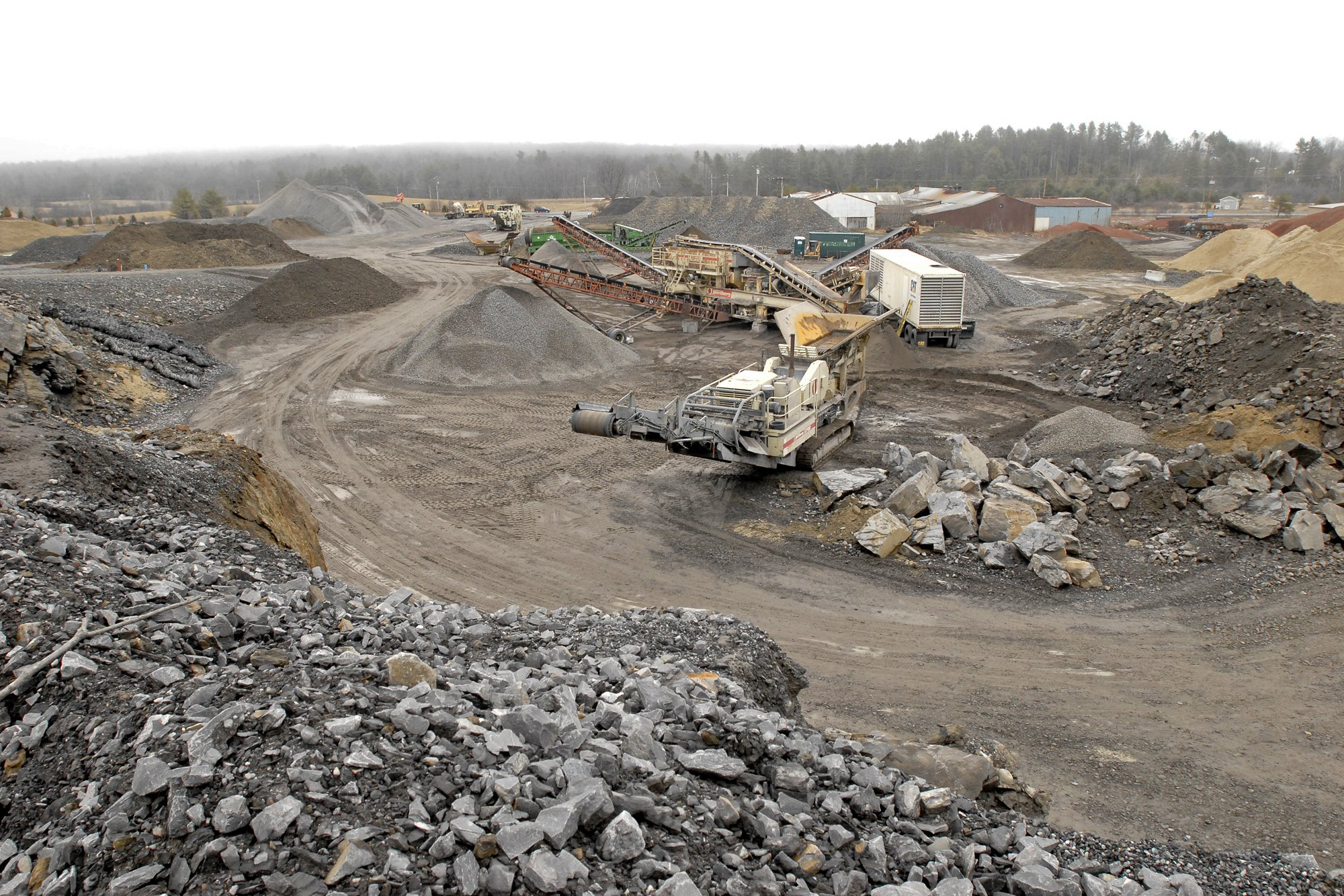
The quarry is one of two active in Gorham, a vibrant and growing town of nearly 20,000 residents a few miles west of Portland, and its frequent blasts are emblematic of a broader trend spanning Maine in recent years: The state’s construction aggregate industry is booming, thanks at least in part to climate change, as property owners erect or repair stone walls to protect against sea level rise, flooding and erosion.
The number of permits to develop new quarries have more than tripled in Maine over the past five years compared to the prior decade, according to the Maine Department of Environmental Protection (DEP). Meanwhile, quarry owners in Gorham and beyond are looking to expand their existing pits, potentially bringing more Maine residents into the pathway of the quarries’ shockwaves.
“If they expand this quarry, we figure it’s going to impact at least another 300 existing houses, let alone the new houses being built,” said Hamblen.
The growth in quarries coincides with trends in Maine and elsewhere in New England, including steady increases in construction and recurring annual road maintenance needs, but also the climate-amplified boom in stone walls.
After a trio of destructive winter storms inundated the central Maine foothills and slammed into the coast two years ago—illuminating the state’s vulnerability to similar climate change-fueled storms—the number of permit applications for seawall projects skyrocketed, expedited by an emergency permitting provision in state statute and a slew of federal disaster funds.
“They had a window in there for a while and you were able to just go and do an emergency repair,” said Skip Murray, owner of the family construction company L.P. Murray & Sons on the southern Maine coast. “I did a lot of work in municipalities in that time frame, and then that was still when you could get reimbursed” by the Federal Emergency Management Agency.
According to a rough analysis of state permit data by the Maine DEP, the number of applications for shoreline stabilization permits nearly tripled from 118 in 2022 to 313 in 2024. Department spokesperson David Madore said the state could not precisely differentiate between projects with sea walls and those without, however, he added that “most applications were for riprap stabilization”—the stone slabs and crushed rock that form the walls.
There are few state regulations on quarries in Maine, critics say, and following the recent surge, more and more towns are considering local moratoriums on new quarries, strengthened ordinances that greatly restrict the activity of existing ones, and even local restrictions on new rock sea walls.
Similar clashes among residents, quarry owners and municipal officials are unfolding beyond Gorham as towns contend with this growth and determine how best to plan for climate change and the state’s mineral needs.
## A Booming Industry
There are roughly 780 active mining facilities across Maine, each excavating a unique combination of minerals and often refining or processing them on-site into sand, rock, gravel and riprap for a variety of construction purposes.
From 2015 to 2021, the state saw a consistent average of three new quarry registrations per year, according to DEP mining coordinator Michael Clark, which then shot up to roughly 10 per year between 2022 and 2025, not counting a handful of expansions at existing quarries.
The town of Wells was hit especially hard by the 2024 winter storms and has seen a mix of riprap seawall and dune restoration projects to stabilize its shoreline. Credit: Emmett Gartner/Inside Climate News
Clark said that he can’t be sure what’s specifically driving that trend but thought that riprap demand could be some part of it, whether it’s used for sea walls or other common uses, such as culvert construction.
Data published by the U.S. Geological Survey shows the value of crushed rock, gravel and sand produced at Maine quarries has doubled over that same period—hovering around $100 million in 2021 and a few years prior, then ballooning to more than $220 million last year.
There isn’t accompanying data on the weight or amount of construction material generating that value, but there is evidence that Maine isn’t the only New England state seeing a surge in aggregate activity.
The Massachusetts islands of Nantucket and Martha’s Vineyard have received a 125 percent increase of construction aggregate that’s been barged over the past 10 years as well as a variety of new coastal resilience projects, according to reporting from The New Bedford Light, while sand excavation sites crop up on the mainland.
Most Maine quarries are concentrated away from the coast, in towns like Gorham or Bridgton, and the state doesn’t closely regulate them beyond their pit size, blasts, dust emissions and equipment exhaust. The amount of blasting or rock crushing varies from quarry to quarry and often depends on whether there’s an obstacle of solid bedrock called ledge.
“There’s generally not blasting unless there’s a ledge,” Clark with the DEP said. “So most pits don’t have ledge. I’ve encountered some, but most do not.”
Despite that variety, many quarry neighbors have similar complaints about the quarries that do use explosives or intensive rock crushing. They describe plumes of dust and disruptive blasting operations they suspect are damaging their homes. They also complain about empty promises from quarry contractors who often refuse to share analysis of the blasts’ seismic data from their property lines. Meanwhile, there is limited oversight from municipal officials, the neighbors say.
## More Blasting in Gorham?
In Gorham, Charlie Hamblen was motivated to run for town council last year by Gorham’s weak quarry ordinances and an ongoing proposal by local aggregate company Shaw Brothers Construction to expand its Brickyard Quarry near Hamblen’s home. He won the election in November 2025.
“The town was not willing to listen to the [quarry] neighbors and work on ordinances to make it a safer place for people, so I got crazy and I ran for town council,” Hamblen said.
Gorham is one of at least five Maine towns in the past two years that have received proposals for new or expanded quarries or considered adopting new ordinances to regulate them.
The town issued Shaw Brothers a permit for its 6.7-acre quarry back in 2008 that allows for industrial rock crushing and an average of roughly 10 to 11 blasts per year.
Under a permit application submitted last year, the company proposed expanding the quarry to the majority of a 26-acre parcel adjacent to the existing pit and capping the number of blasts at 18 per year.
The Gorham town council rejected it in February 2025, and Shaw Brothers withdrew a subsequent request to rezone the area for industrial development, putting the project partly on hold until the company resubmitted its rezoning request earlier this summer. The Gorham planning board then unanimously recommended that the town council approve the request in early August. Now it is up to councilors to decide.
Hamblen saw the pause as the perfect opportunity for the town to explore amendments to its current mineral extraction ordinance, which has no annual limit on the number of blasts a quarry can execute so long as they meet a set of criteria. The blasts must be approved by the town, and accompanied by detailed blasting reports with seismic data made available for public view.
At the August rezoning meeting, Shaw Brothers owner Dan Shaw told the Gorha