Le·gal In·sur·rec·tion · mechastain · September 9, 2026
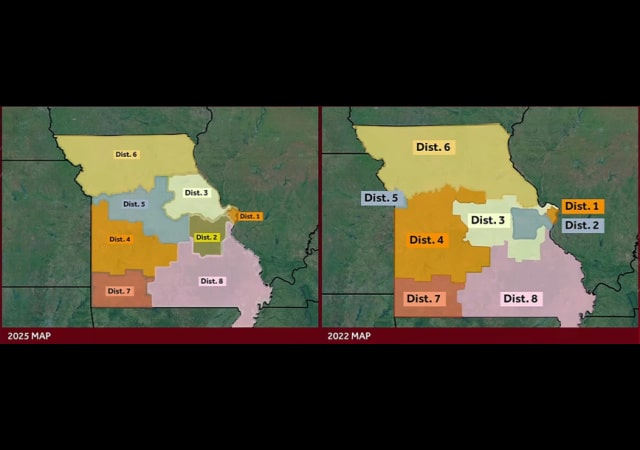
Three things happened with Missouri's new congressional map in the last five days.
Kavanaugh did not explain his denial.
But Kavanaugh's rejection meant that Missouri could "renew its application with another Justice, while separate federal lawsuits remain pending that seek to restore the new map for November."
Chief Judge Stephen Clark restored the map a few hours later with a temporary restraining order (TRO).
"Plaintiffs face irreparable harm absent a TRO because many Missouri voters would have to cast their general-election votes for candidates whom they had no role in nominating," wrote Clark. "Candidates who had no choice but to campaign and raise money in the HB 1 districts that Missouri's highest election authority presented to them, have spent their funds and campaign efforts in districts that would no longer exist."
Therefore, using any other map than the new map, "would disenfranchise primary-election voters and undermine the nominations of candidates chosen in the primaries, leading to 'certain' and 'great' harm, not merely 'speculative' or 'possible' harm."
Clark also said that any irreparable harm the TRO might cause the defendants "pales in comparison to the irreparable harm that Plaintiffs" and the public would suffer without it.
Plaintiffs also invoked the Elections Clause, arguing that the state constitutional provision must "'supply [a] clear, deliberate statement' to 'divest its legislature of redistricting authority.'"
Clark concluded that the Plaintiffs likely won't succeed on the merits with their Elections Clause claim since "the referendum is a licit part of the legislative power in Missouri."
"States may choose to vest parts of the legislative power in bodies other than the General Assembly, and Missouri has so chosen," wrote Clark. "In turn, states may permit their voters to challenge redistricting maps by referendum without running afoul of the Elections Clause."
Clark rejected it for two reasons (omitted citations):
First, the referendum doesn't divest the Missouri legislature of redistricting authority, as the people are part of the Missouri legislature through the referendum process.
Second, to the extent a clear statement rule applies in the Elections-Clause context, the Missouri Constitution's referendum provision is as clear as the Ohio Constitution's provision upheld in Hildebrant -- both referendum powers apply to any law of the General Assembly
I will update this post if anything happens today.
Donations tax deductible
to the full extent allowed by law.