WHYY · Marc Levy · September 8, 2026
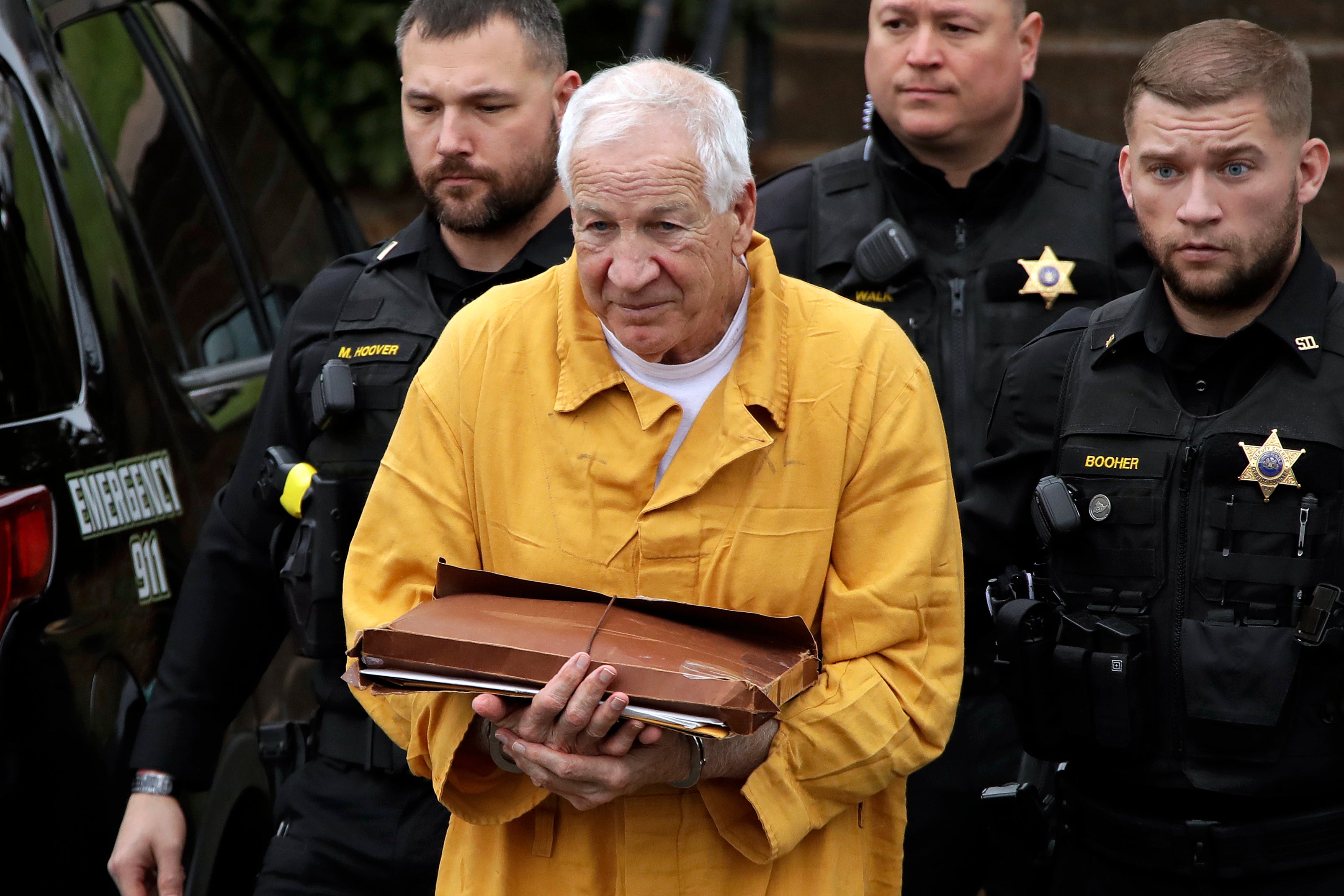
Former Penn State assistant football coach Jerry Sandusky appeared in court remotely Tuesday where he said he agreed with his lawyers not to go forward with testimony from an accuser who wants to recant allegations that Sandusky sexually abused him years ago.
The hearing was part of the latest bid by Sandusky’s lawyers to secure a new trial for him as his lawyers prepare to go to federal court to seek a new trial after failing repeatedly in state courts.
In court, Sandusky, 82, appeared on a video screen in a spare room in Laurel Highlands state prison, seated at a small table in a maroon-colored shirt looking up at the camera through glasses.
Under questioning, he told Centre County Judge Maureen Skerda he had consulted with his lawyers about the decision not to present the accuser’s testimony recanting the allegations from Sandusky’s 2012 trial.
“I’m making this decision on advice of counsel,” Sandusky said, his arms on the table in front of him, a notepad between them. “Is there anything wrong with that?”
Sandusky, 82, has been serving a decades-long prison sentence since he was convicted of 45 counts of sexual abuse in 2012, after eight young men testified about what happened to them as boys.
Sandusky’s lawyer, Jerry Russo, told reporters later that state courts frown on granting new trials based on a witness recantation, seeing it as “inherently unreliable.”
Instead, Russo said, he plans to take Sandusky’s broader claims for a new trial to federal court — Sandusky’s made at least three attempts in state courts — after one more procedural appeal in state court.
Last year, Sandusky’s lawyers had asked for a new trial, claiming there were inconsistencies in the accusers’ testimony and that their testimony was driven by the possibility of financial gain, coaching by prosecutors and “therapy intended to (help) them reconstruct memories of alleged abuse.”