Salon · Ayden Runnels, Alex Ford · September 6, 2026
Lawmakers added $1 to Texans’ car insurance policies. That money paid for thousands of Flock cameras - Salon.com
# Lawmakers added $1 to Texans’ car insurance policies. That money paid for thousands of Flock cameras
## The higher fee, meant to combat catalytic converter theft, provided millions to expand Flock's network across Texas
By Ayden Runnels - Alex Ford
### Published September 6, 2026 6:00AM (EDT)
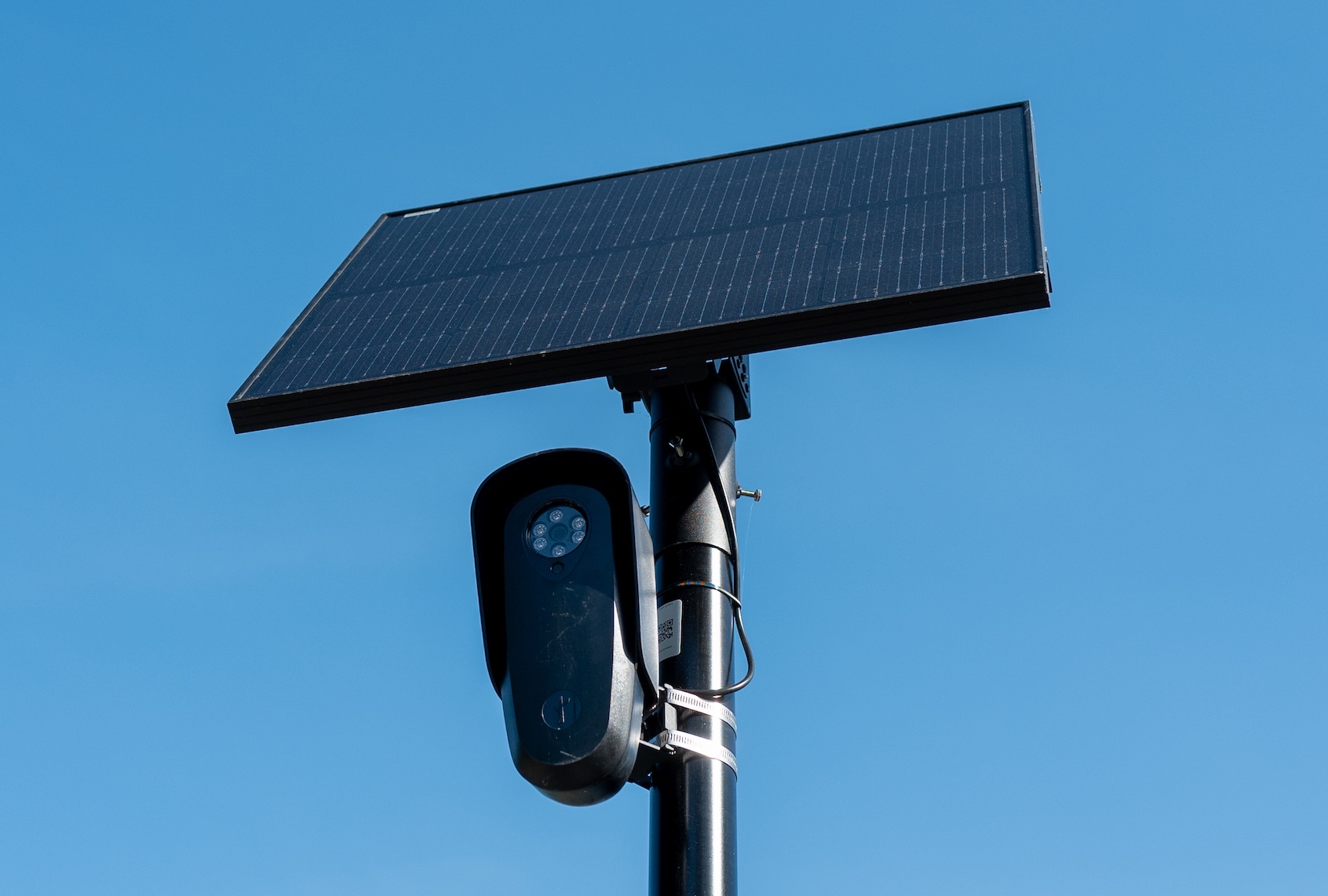
Flock license plate reader and camera with solar panel against a blue sky, Pleasant Hill, California, April 16, 2026. (Photo by Smith Collection/Gado/Getty Images)
This article originally appeared on The Texas Tribune.
In 2023, the Texas Legislature unanimously passed a law raising auto insurance costs for Texans by $1 to combat rampant catalytic converter theft.
Three years later, a little-known state agency has devoted at least $30 million of that fee toward supercharging the state’s Flock surveillance network, placing cameras along highways and streets from El Paso to the Louisiana border, an analysis by The Texas Tribune found.
The Motor Vehicle Crime Prevention Authority, led by a board mostly appointed by Gov. Greg Abbott, has turned the $1 fee hike into at least 3,200 Flock cameras.
The agency has awarded no fewer than 95 grants to help law enforcement agencies purchase and maintain about 2,000 Flock cameras. Another $15.9 million is helping the Texas Department of Public Safety add almost 1,200 more.
The effort is far from over. In early August, the agency approved another $3 million to help DPS install 583 more cameras along Texas tollways over the next year.
Miguel Rodriguez, chair of the Motor Vehicle Crime Prevention Authority, said during an August 2023 meeting that he hoped to use proceeds from the fee increase to “cover the entire state” with cameras.
Rodriguez, who is also the Laredo Police Chief, sees the cameras as a powerful law enforcement tool, particularly to combat criminal organizations.
“That kind of capability directly disrupts the operational advantage these transnational criminal organizations rely on, and it strengthens our ability to protect both Texas communities and the broader region,” he said in an email.
(Brandon Bell/Getty Images)
A Flock camera records as a car drives through Hermann Park near the Houston Zoo on Sunday, Aug. 23, 2026.
But on Friday evening, after multiple requests for comment from the Tribune about its findings, Abbott’s office said the governor was pausing all state funding for local grants to be used for Flock cameras.
“To the extent that cities get any funding for those cameras, most of it comes from the federal government. To the extent any funding comes from Texas agencies, those agencies are clarifying that those funds cannot be used for Flock cameras,” Abbott spokesperson Andrew Mahaleris said in a statement shared first with the Tribune.
The $1 per year fee increase has raised an estimated $81 million, allowing the authority to funnel $50.8 million into 234 grants that have helped reimburse police departments for officers, crime analysts and attorneys to prosecute vehicular crimes, as well as drones and other surveillance devices.
The Tribune found agency grants to police departments ranged from $7,000 for two Flock cameras in Bellmead, near Waco, to almost $1.7 million for 201 cameras in Dallas. Some city networks — like the 165 cameras in Laredo and 150 in El Paso — were entirely subsidized by the grants.
The state agency does not detail how much of its grant money went to Flock cameras. Instead, the Tribune tracked the grants by reviewing the vehicle authority’s meeting records, as well as documents, agendas and discussions from 101 city councils and county commissions that approved or discussed Flock-related grants.
It is likely the authority has paid for more Flock cameras than the Tribune analysis found because 124 grants lack clear public documentation about what was purchased.
The statewide effort to proliferate Flock cameras comes as backlash is mounting over the surveillance, including from some members of the Legislature, where the $1 fee was approved without opposition.
“The sheer volume of information captured is not something that is entertained, in my view, by the Fourth Amendment,” said Rep. Mitch Little, R-Lewisville.
(AP)
A man rides a bike past a Flock camera in Bay City on Sunday, Aug. 23, 2026.
State Sen. Carol Alvarado and Rep. Jeff Leach, the bill’s author and House sponsor, said surveillance cameras were never discussed when the bill was considered. Alvarado said she was surprised to learn from the Tribune that the insurance fee was funding AI-supported license plate readers.
“I did not have that in mind when we passed the bill,” said Alvarado, D-Houston. “When I think of combating crime, I’m thinking … more boots on the ground, hiring more officers to tackle the crime or some type of undercover work.”
Alvarado said there is a “fine line” between protecting the public from crime and protecting people’s privacy, but said she did not plan to file legislation to shift the grant requirements.
Flock cameras, the nation’s most commonly used license plate reader, create a “vehicle fingerprint” with the use of artificial intelligence — storing each vehicle’s license plate, make, model, color and details such as dents and bumper stickers in a database accessible by law enforcement across the country without having to obtain a search warrant.
The exact number of Flock cameras in Texas is unclear. DeFlock, an anti-surveillance watchdog that has mapped the locations of Flock cameras using verified crowdsourcing, has identified about 13,000 in the state. By that count, the insurance fee increase has paid for one in four Texas cameras.
That also represents a sharp increase in Flock cameras in the state since December 2023, when a company spokesperson told the vehicle authority’s board that there were about 7,500 cameras in the state.
Flock does not disclose how many cameras it has in the field, but Texas is estimated to have the second most in the nation, after California. Nationally, Flock officials say, about 7,000 law enforcement agencies use a total of 120,000 cameras and other surveillance products.
In Texas, state agencies don’t rely solely on vehicle authority grants to add surveillance devices, and Abbott’s office pointed to federal grants for funding the cameras. DPS, for example, has a $28.5 million contract for Flock cameras. But the grants have helped get the cameras into the hands of the state’s smaller police departments that may have struggled with the cost of the equipment.
Departments that opt in to Flock’s national lookup program can search each other’s data from anywhere in the country, allowing vehicles to be tracked with unprecedented efficiency.
The ability to share data “has been one of the most effective ways Flock has been able to help find, just last year, over 10,000 missing persons,” Flock spokesperson Trevor Chandler said in an interview.
A Flock camera records drivers on Westheimer Road near The Galleria in Houston on Monday, Aug. 24, 2026.
But for a rapidly growing coalition of Texans opposed to the cameras, the Flock network is a dangerous combination of invasive surveillance and limited oversight that undermines privacy rights.
Kenneth Feagins, an organizer with DFW DeFlock, one of several new grassroots anti-surveillance groups in the state, said he sees an “alarming trend” of police improperly accessing a network that can amass data on where people live, shop, worship and work.
“For me, it’s always been the question of, well, how much liberty are we willing to trade for safety?” Feagins said.
Recently revealed examples of misuse — including police officers using Flock data to stalk ex-partners and co-workers — have sharpened those concerns.
A Lufkin officer was indicted Aug. 24 on 100 counts of misusing official information, which Abbott cited as a concerning development during a Friday radi